
By , , , , , , , and , Bowling Green State University
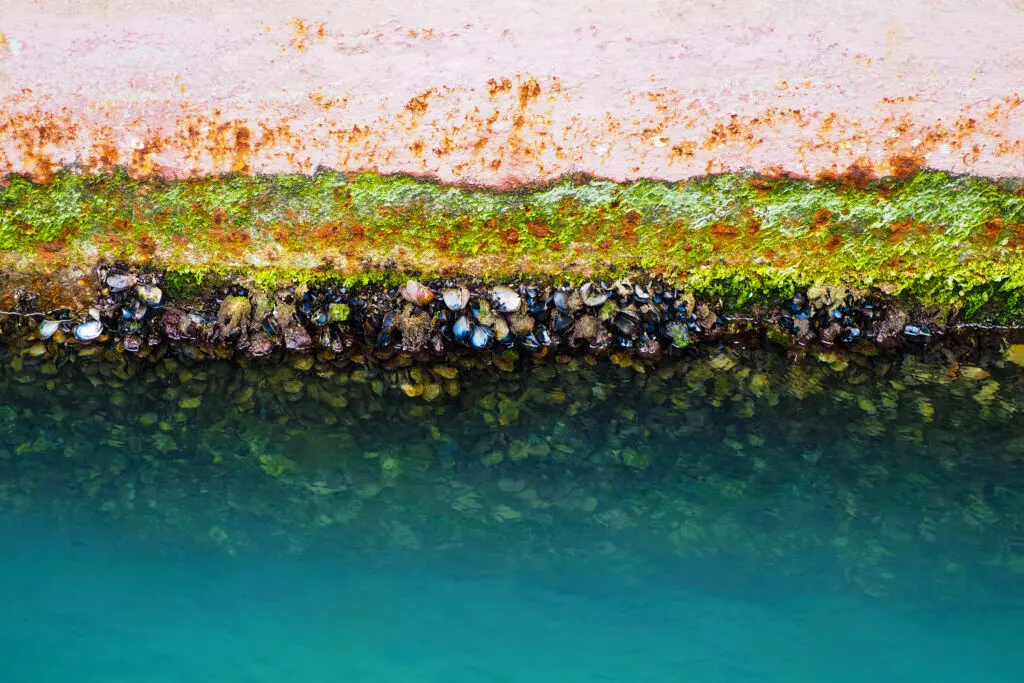
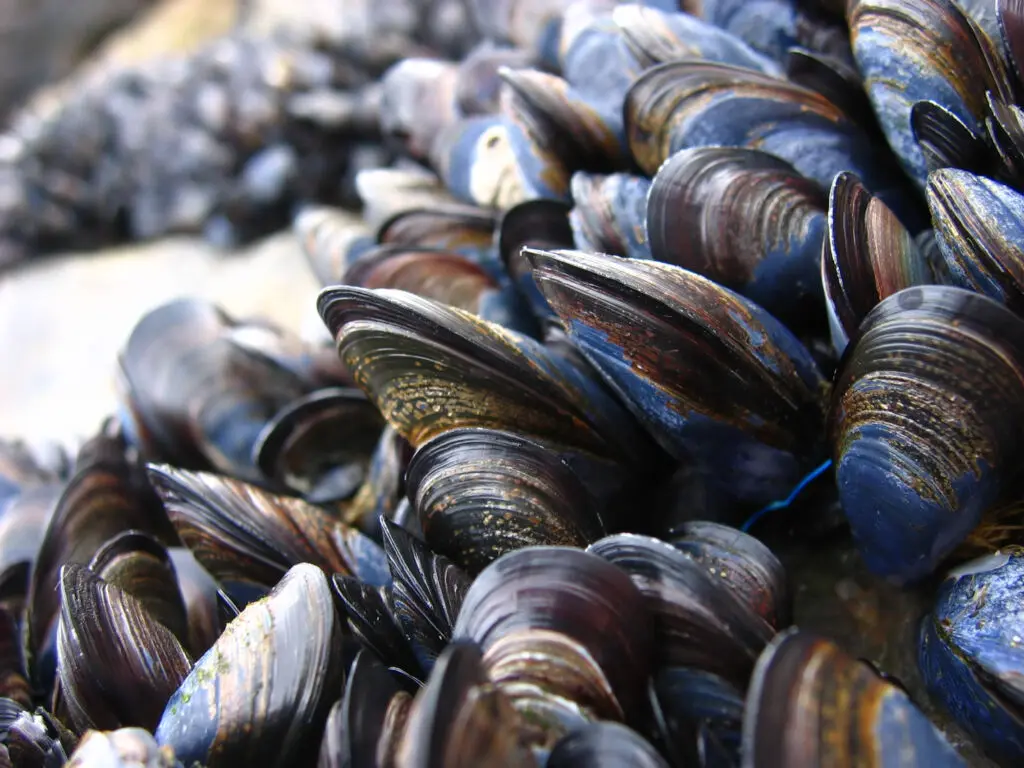
The growing problem of invasive mussel species in the Great Lakes has prompted researchers to create innovative solutions aimed at preventing their spread to inland lakes and reservoirs. These mussels attach to various surfaces, both in the upper (epilimnion) and deeper (hypolimnion) layers of lakes. During the winter months, mussels will die off, leaving the large structures constructed of their shells on the lakebed. Their colonies recede into the deeper waters where water temperature is warmer than the icy conditions on the surface. In the spring and summer, the mussels return shoreward, recoating the left-behind shell structures and adding layers of shell material to the submerged landscape. Juvenile mussels are released from fish hosts and can migrate or float to nearly any structure or vehicle, with bilge water from ships often transporting them to new locations. Once attached, mussels begin their reproductive cycle, and this adherence is key to their spread. If prevented from attaching, they are forced to relocate, increasing competition for space and resources.
To combat fouling, researchers have developed a clear, tri-cure hybrid silsesquioxane coating that is inexpensive, easy to apply, and safe for aquatic environments. When applied to glass or fiberglass, materials they readily attach to, this coating prevents the bonding of mussel proteins to surfaces, making them resistant to fouling. By coating boat hulls, boat owners can reduce mussel attachment, slowing the spread of invasives, saving on costly maintenance, reducing drag, and contributing to the protection of other aquatic ecosystems.
Introduction
Marine biofouling, which is the undesirable accumulation of microorganisms, plants, and animals on submerged surfaces, poses significant operational and environmental challenges to maritime industries and aquatic infrastructure.1-3 The consequences of biofouling are far-reaching. It causes increased hydrodynamic drag on vessel hulls which reduces fuel efficiency and speed, while simultaneously contributing to higher greenhouse gas emissions.4-7 In addition, biofouling accelerates the corrosion of submerged metal and concrete surfaces, clogs pipelines in coastal and nuclear facilities, and disrupts water flow and nutrient exchange in aquaculture systems.8,9
One of the most practical and effective strategies for mitigating biofouling is the use of protective surface coatings or coating additives. These are broadly classified into biocidal and nonbiocidal types. Biocidal coatings rely on the controlled release of toxic agents from a polymer matrix to prevent organism settlement and are considered antifouling coatings.10 The efficacy of such coatings is governed by the biocide’s release rate and its environmental compatibility that should ideally combine strong antifouling activity with low toxicity and moderate fresh and sea water solubility. Unfortunately, only a limited number of biocides meet these stringent requirements for safe and sustained marine use.11
Nonbiocidal coatings primarily include fouling-resistant and fouling-release coatings (FRCs). Fouling-resistant coatings are typically based on hydrophilic polymers such as poly(ethylene glycol) (PEG) and zwitterionic materials, which prevent initial organism adhesion.12 However, their tendency to swell in saline environments leads to poor mechanical performance. In contrast, FRCs utilize hydrophobic, low-surface-energy materials that allow weakly adhered organisms to be easily removed under mild shear forces. Polysiloxanes are commonly used as FRCs and offer excellent thermal and photochemical stability, though their long-term performance is limited by hydrolytic degradation. To overcome these limitations, hybrid organo-silicon coating systems have been developed. These systems integrate organic and inorganic elements to combine durability, antifouling characteristics, and environmental resilience.13,14 For instance, R-alkoxysilanes, particularly methoxy and ethoxy variants, have long been employed to consolidate porous substrates like stone by forming crosslinked siloxane networks with the ratio [RSiO3/2], or silsesquioxanes that also contain organic bridges. When incorporated into coatings, these networks offer benefits such as low thermal conductivity, oxidative resistance, and mechanical integrity.
Among silicon-oxygen-based coating systems derived from alkoxysilanes, tetraethoxysilane (TEOS) is a widely used precursor.15,16 However, its slow curing rate often necessitates acidic or basic catalysts and long reaction times. As an alternative, photocuring methods that utilize photoinitiators to trigger rapid organic polymerization under light have gained popularity for enabling fast curing without complex handling or component separation. Moreover, using R-functional trialkoxysilanes with epoxy, amine, thiol, or fluorocarbon side groups allows tailoring of surface adhesion, hydrophobicity, and internal stress relief within the final silsesquioxane-based coating.17
Bioinspired approaches have further guided the design of antifouling surfaces. Many plants and insects feature microstructured, waxy coatings that combine hydrophobicity with self-cleaning properties. Mimicking these strategies, coatings with nanoscale surface roughness and low-surface-energy materials (e.g., fluoropolymers) have been developed to enhance water repellency and reduce biological adhesion.