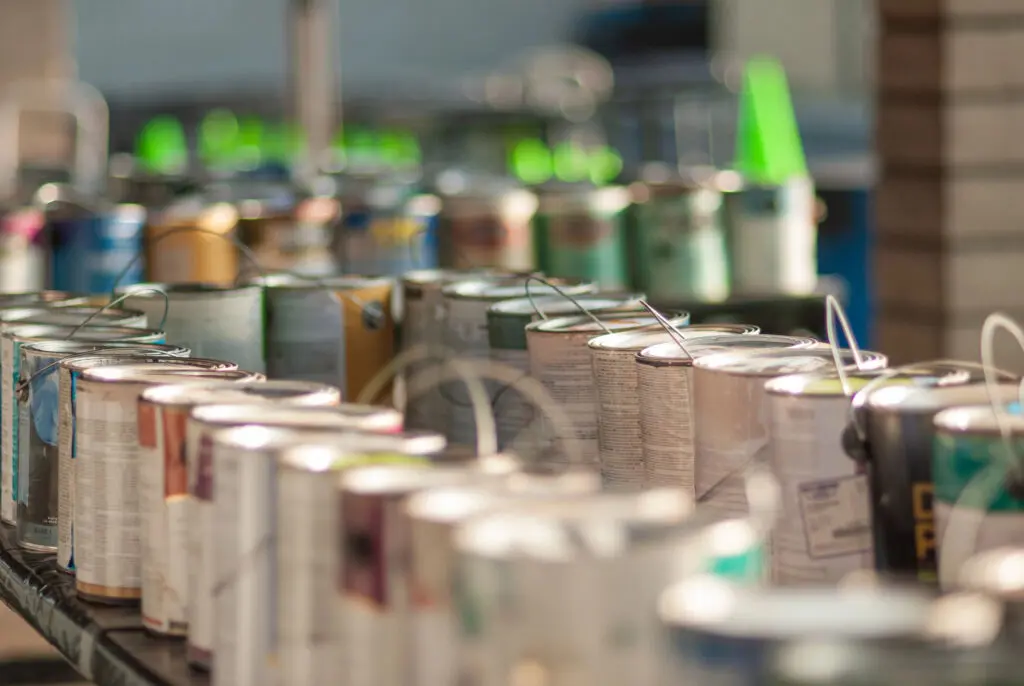
PaintCare is at the forefront of product stewardship policy and its practical implementation for the U.S. coatings industry. The American Coatings Association (ACA) established the nonprofit program in 2009 to represent architectural coatings manufacturers in states that enact product stewardship laws. Through PaintCare, manufacturers fund and operate a statewide system to collect, transport, and responsibly manage leftover paint from households and businesses.
Since launching the first state program in Oregon in 2010, PaintCare has expanded to 11 additional states and the District of Columbia, with further legislation under consideration across the country. For coatings manufacturers, the program demonstrates how coordinated industry stewardship can create a scalable, compliant, and measurable framework for managing leftover products.
Going back to its earliest days and through to its expansion across the country, the program has been led by its president, Marjaneh Zarrehparvar, who provides insight into the development of this ground-breaking program and plans for future expansion.
PaintCare has been operating stewardship programs for more than 15 years. How does the program work?
PaintCare is a nonprofit organization established and led by coatings manufacturers that operates paint recycling programs in states that enact paint stewardship laws. To make that happen ACA works with legislators, state and local government agencies, and stewardship advocacy groups to put forth ACA’s model legislation for the program. Once a bill passes and is signed into law, PaintCare develops a program plan outlining the framework of drop-off sites and services, paint collection and processing, public education, and funding.
Government oversight agencies in each state review and approve the program plans. After approval, our team proceeds with implementing the plan and launching the program to the public. PaintCare recruits paint drop-off sites throughout the state that are conveniently located in communities and open daily. We contract with certified waste haulers to transport paint collected at the sites, sort materials, and manage them appropriately, reusing and recycling as much as possible.
Meanwhile, manufacturers are required to register all products covered by the program that are sold into the state so there is accountability for all producers in the state. To fund all aspects of the program, they add a fee to the cost of these products, called the “PaintCare fee,” which is remitted to PaintCare for that purpose.
What types of coatings products does PaintCare accept?
PaintCare sites accept architectural coatings such as house paint, primers, stains, sealers, and clear coatings like shellac and varnish. Accepted “PaintCare Products” are the same ones that carry the PaintCare fee when purchased. Sites do not accept aerosol coatings, solvents, and products designed and labeled to be used for industrial or non-architectural use.
How does the PaintCare model differ from the traditional municipal household hazardous waste (HHW) programs that historically managed leftover paint?
In states that have not yet adopted PaintCare, county- and city-run HHW programs and other solid waste facilities may be the only options for managing leftover paint. In some areas, these programs may offer very limited hours and services and may not accept waste from businesses at all. These programs are usually funded by tax revenue, which means all taxpayers shoulder the cost burden.
With PaintCare, the responsibility for managing leftover paint shifts to those who make, sell, and use the product. The PaintCare fee added to a product’s purchase price covers the costs of an extensive and convenient network of drop-off sites, paint transportation and processing, and public education that informs consumers about recycling opportunities. Together these activities help consumers reduce waste, free up storage space, and manage materials responsibly.
In which states are PaintCare programs active, and what types of drop-off sites participate in the program?
PaintCare is currently active in the 12 states that have enacted paint stewardship laws—California, Colorado, Connecticut, Illinois, Maine, Maryland, Minnesota, New York, Oregon, Rhode Island, Vermont, and Washington, as well as the District of Columbia. In these states PaintCare provides more than 2,900 drop-off sites—that means there’s a paint recycling option within 15 miles of more than 95% of the population in each state.
About 80% of these sites are conveniently located paint and hardware retail stores that volunteer to serve as drop-off sites in their communities. PaintCare also partners with material reuse stores, recycling centers, city and county solid waste facilities, transfer stations, and recycling centers. The program even includes a direct pickup service for large volumes of paint of 100 gallons or more for businesses like painting contractors who accumulate large amounts that are difficult and costly to manage.
Once paint is collected, how is it sorted and managed? What portion of PaintCare collected products is reused, recycled, used for energy recovery, or otherwise processed?
In general, paint is managed according to a policy of highest, best use. This means that some of the paint in good condition is made available to consumers through reuse programs, and most of the paint is recycled. If it can’t be reused or recycled, processors find the next best use for it.
Latex-based products make up about 80% of what PaintCare accepts at drop-off sites. Most of the paint is sent to processors and used to manufacture recycled-content paint products. A small percentage of dry latex paint is securely disposed of if no other use can be found. Oil-based products make up about 20% of the products collected at PaintCare sites. All these products are sent to processors, and most of it is used as fuel. PaintCare is always working with its partners to determine if any additional uses for leftover paint can be found.
What strategic priorities or program expansions are on the horizon for PaintCare?
Most recently, PaintCare launched operations in Illinois in December 2025 and Maryland in April 2026. With these new additions to our states, we’re now providing paint stewardship opportunities to over one third of the U.S. population! We don’t take that responsibility lightly and are focused on ensuring our organization structured to be successful across all its activities, from engaging with manufacturers, to managing transporter and processor relationships, to training field staff on the ground in each state, and everything in between.
Additionally,, PaintCare is evolving to meet industry needs in light of new laws requiring stewardship of additional coatings products. Legislation enacted in California expanded the PaintCare program to include aerosol coatings, non‑industrial coatings, and a variety of coating‑related products. Vermont followed suit in 2025, mirroring California’s expansion. PaintCare has begun developing guidance defining these expanded categories, consulting with stakeholders, and evaluating collection and fee models. These efforts demonstrate that manufacturers can look to PaintCare, its industry-led stewardship program, for needed support in a constantly shifting landscape.
What role do retailers play in the program’s effectiveness, and how has retailer participation evolved since the launch?
Without the support and participation of retailers, our program simply could not be successful. We are truly grateful to them for supporting the program!
Retailers are required by the law to sell only registered PaintCare products and include the PaintCare fee in the product purchase prices. Many also volunteer to serve as a drop-off site and therefore play a hands-on, customer-facing role in the program as they accept paint from households and businesses in their community. PaintCare provides everything that is needed—collection bins, staff training, as well as transportation and recycling services. They also serve as an important source of education, using PaintCare‑supplied materials to explain the fee, the purpose of the program, and how customers can easily recycle their paint.
Serving as a drop‑off site can boost foot traffic—customers coming in to recycle leftover paint often browse or pick up supplies while they’re there. PaintCare promotes participating locations publicly, giving retailers extra visibility as environmentally responsible businesses. All in all, it’s a low‑effort way for stores to support sustainability, draw in customers, and strengthen goodwill in their communities.

Marjaneh Zarrehparvar has led PaintCare since 2009. Prior to that, she spent more than a decade at the San Francisco Department of the Environment directing hazardous waste and toxics reduction programs, developing collection initiatives, leading public education efforts, and helping shape product stewardship legislation. Earlier in her career, Marjaneh conducted toxicology research for the California EPA. She holds a B.S. in Environmental Toxicology from the University of California, Davis, and lives in the Bay Area, where she enjoys outdoor activities. Email: mzarrehparvar@paint.org