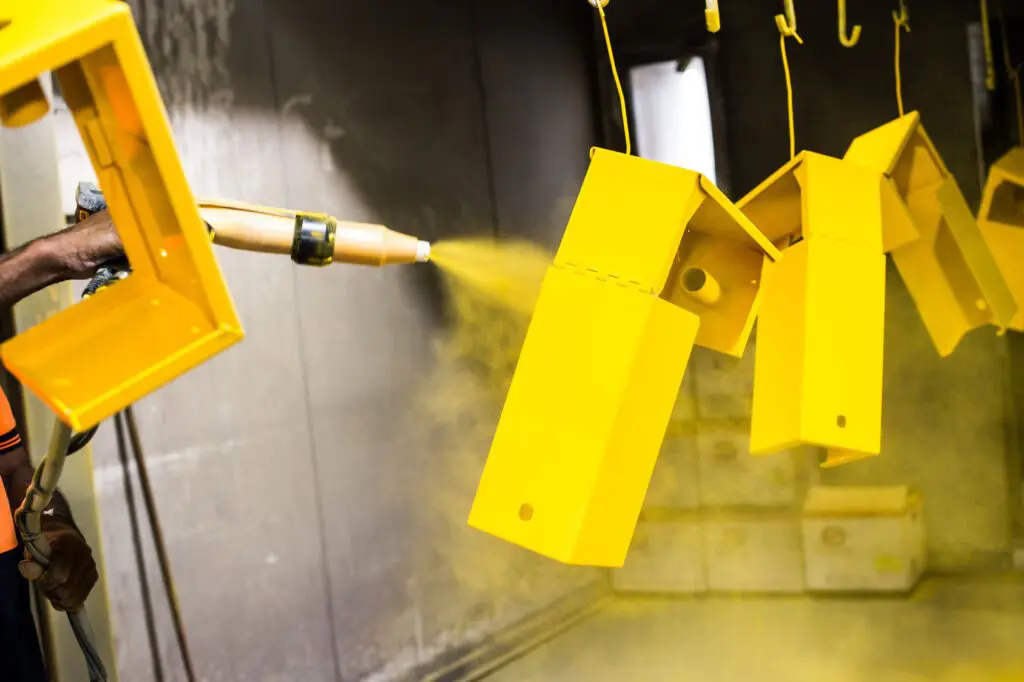
Powder coatings have evolved from a niche technology into a cornerstone of modern industrial finishing, valued for their durability, efficiency, and environmental benefits. Few professionals have witnessed that evolution as closely as Kevin Biller, director of ChemQuest Powder Coating Research. In this Q&A, Biller reflects on the developments that have shaped the industry, the innovations that continue to drive it forward, and the opportunities awaiting the next generation of coatings professionals.
Q: What developments in powder coatings have had the biggest impact on the coatings industry?
A: The powder coatings industry started in the 1950s–1960s as a laboratory curiosity in Europe and has evolved into a major force in factory-applied coatings throughout the world for a wide array of applications.
During the late 90s and into the 2000s, many developments converged. After decades of sitting on the sidelines, major paint producers finally got on board and displaced the pervasive entrepreneurial spirit of smaller enterprises with a more corporate business approach. An ongoing consolidation of small and medium-sized powder formulators followed, reducing the number of players vying for business.
Overcapacity ensued and, with it, slimmer profit margins. Capital investment shifted to overseas markets (mainly East Asia) and squeezed R&D budgets, stymieing innovation. These developments set the foundation for the powder industry today.
Q: What changes in powder coatings have most surprised or impressed you over the years?
A: In my mind, the technical and commercial pinnacle of powder coating technology occurred in 1999, when BMW Motors commissioned a powder coating topcoat line for their 5- and 7-Series cars in Dingolfing, Germany. Intense R&D, both in materials and process technology, led to powder coating technology that exceeded all the demanding properties embodied in an automotive topcoat specification: exceptional smoothness and clarity; outstanding UV durability; excellent chemical and abrasion resistance; and impressive application performance (i.e., film thickness control)—all at an acceptable applied cost.
This represents the industry’s most impressive achievement, as well as its biggest disappointment. Following 15 years of excellent performance and economics, BMW (as well as the rest of the major automotive manufacturers) decided to shelve powder clear topcoats for alternate liquid paint technologies.
Q: What challenges remain for powder coatings?
A: One of the challenges we face today in powder coatings is our ability to attract and develop the next generation of technical talent.
Addressing this challenge requires greater engagement with educational institutions at every level, including universities, community colleges, and technical schools. We need to connect with talented, motivated students and introduce them to the opportunities available in our industry, giving them a reason to consider careers in coatings, manufacturing, and materials science.
Q: Where do you see the next major area of innovation in powder coatings emerging?
A: I see the most significant innovation in powder coatings emerging from process technology. One promising development is the use of near-infrared laser curing, which concentrates energy directly on the coated surface and enables powder coatings to melt and cure in seconds rather than the 15–20 minutes typically required in conventional ovens.
Robotics and automation are also becoming increasingly important in powder coating operations. As hardware becomes more affordable and programming more standardized and userfriendly, automated application systems are becoming accessible to a wider range of manufacturers.

Kevin Biller serves as director of ChemQuest Powder Coating Research. He has been developing, commercializing, and manufacturing powder coatings since he began his career in 1978 at the Glidden Paint Co. He served in leadership positions for numerous companies over the years before establishing the Powder Coating Research Group in 2007, which was acquired by The ChemQuest Group in 2021.